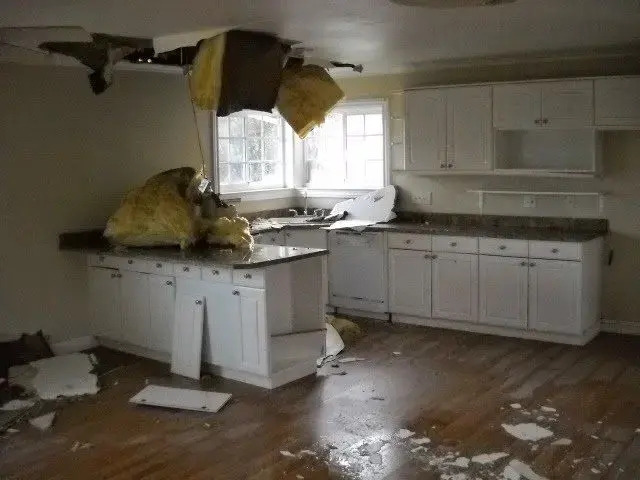
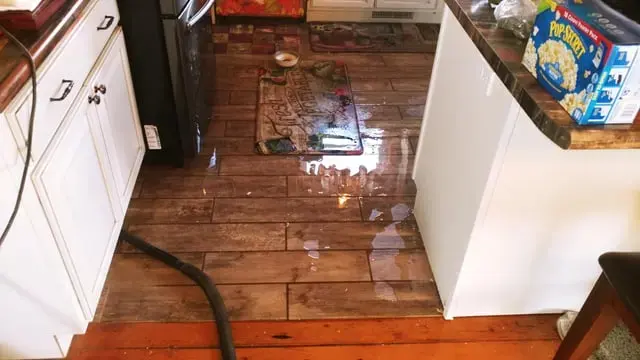
A burst supply line is clean water at full household pressure, and it does not stop until the valve is closed. In a two-story Carrollton house a break upstairs soaks the ceiling below, runs down the wall cavities and pools on the slab, so the wet area is almost always bigger than the puddle.
Where burst pipes fail in Carrollton homes
- Supply lines in exterior walls and attics, most often after a hard freeze
- Polybutylene supply pipe in homes built roughly 1978 to 1995
- Fittings and shutoff valves under sinks and behind toilets
- Lines to the ice maker, laundry box and outdoor hose bibs
How a burst pipe loss is handled
Speed matters because Category 1 water can turn to Category 2 as it sits and picks up contaminants from the building.
- The water gets shut off and the source made safe.
- The extraction crew clears standing water from floors and pulls water out of carpet and pad.
- The tech who does the walkthrough maps every wet wall, ceiling and cabinet with meters and thermal imaging.
- Small drill holes or controlled flood cuts let air movers dry wall cavities instead of replacing whole walls.
Drying and documentation
Air movers and LGR dehumidifiers run until readings reach the drying goal. The claim file gets the moisture map, daily logs and timestamped photos before any demolition. Water that came through a ceiling is covered on the ceiling leak page, and freeze damage on the frozen pipe page.
Find the main shutoff now. In most Carrollton homes it sits in a box near the curb or on the wall of the garage. Knowing where it is saves gallons.
Prevention
EPA WaterSense has simple checks for leaking fixtures and hidden leaks, and Ready.gov winter weather covers protecting pipes before a freeze.