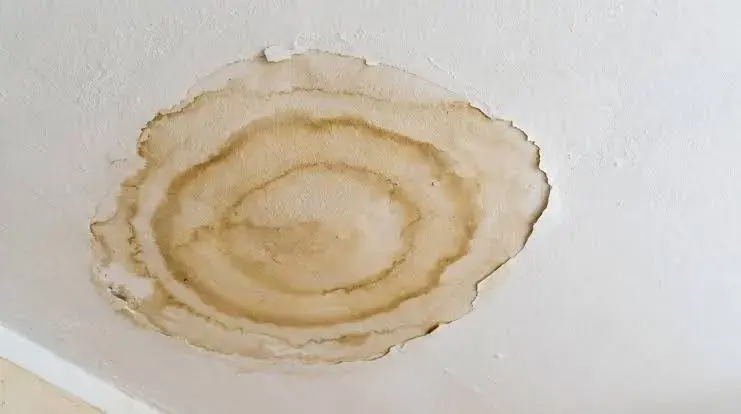
Most ceiling leaks in Carrollton come from inside the house: a toilet supply line, a shower pan, a tub drain or a laundry box on the second floor. Water spreads across the top of the ceiling drywall before it shows, so the stain you see is usually the smallest part of the wet area.
Common sources above a Carrollton ceiling
- Upstairs bathrooms: wax rings, shower pans, tub overflows and grout failures
- Supply lines to toilets, sinks and second-floor laundry
- Attic AC condensate pans and attic water heaters
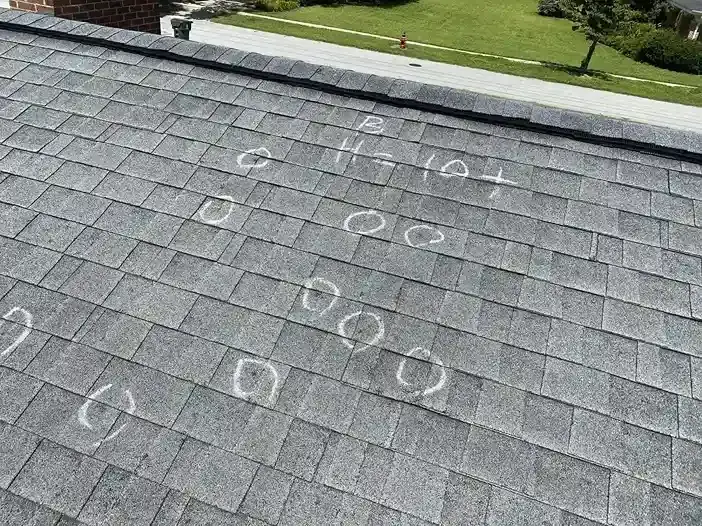
- Roof and flashing leaks after hail or wind
Why ceiling leaks need fast attention
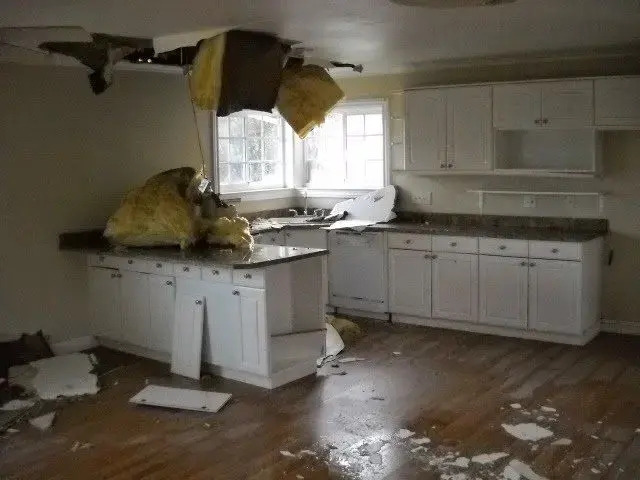
Wet drywall loses strength and can sag or fall, especially with wet insulation on top. Water near light fixtures and ceiling fans is an electrical hazard. And water trapped above the ceiling keeps wetting the framing until someone opens a path for air.
How the mitigation team handles it
- Thermal imaging and meters map the wet area above the drywall and down the walls.
- The source is stopped and a plumber or roofer brought in when needed.
- Firm drywall is dried in place with small vent holes; sagging sections are removed safely.
- Air movers and LGR dehumidifiers dry the ceiling cavity, walls and flooring until readings meet the drying goal.
A bulge in the ceiling? Keep people and pets out from under it and switch off the light circuit. Do not poke it from below while standing under it.
Related causes
If the ceiling sits under an attic air handler, see attic AC drain line leaks; after hail, see hail and storm roof leak damage. CPSC covers electrical safety around water, and EPA WaterSense explains checking fixtures for leaks.