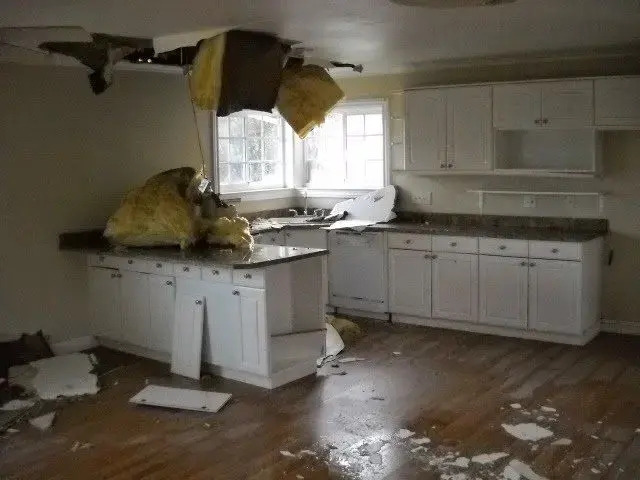
Carrollton builders put water heaters in two places: the garage and the attic. A garage tank that fails floods the slab and wicks into the shared wall with the house. An attic tank that fails sends the whole tank, plus whatever the supply line keeps feeding it, through the ceiling below.
Why tanks fail
- Sediment and corrosion eat through the bottom of a tank, usually after 8 to 12 years
- The temperature and pressure relief valve discharges and its drain is missing or blocked
- A supply connector or fitting cracks at the top of the tank
- The drain pan under an attic tank rusts through or was never connected to a drain
How the cleanup runs
- The cold supply valve on the tank is closed and the power or gas turned off.
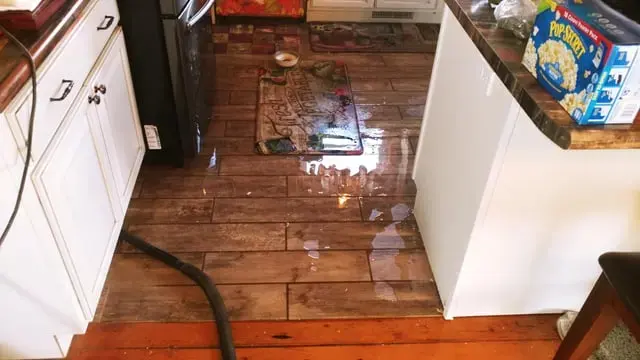
- The extraction crew removes standing water from the garage slab, rooms and carpet.
- Moisture mapping follows the water into ceilings, wall cavities and flooring.
- Air movers and LGR dehumidifiers dry the structure until readings meet the drying goal, then the logs go in the claim file.
Attic tanks need extra care
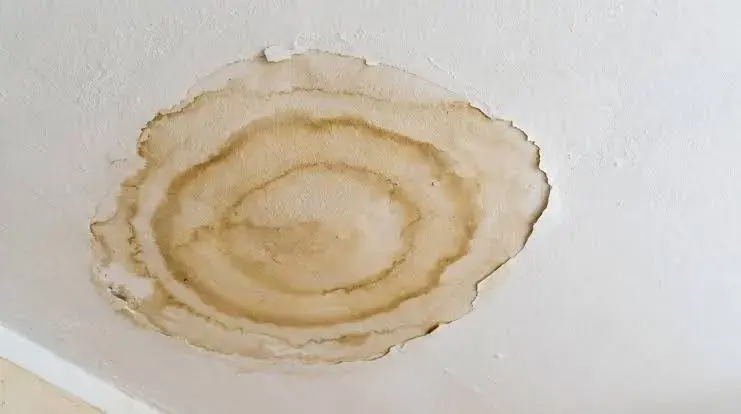
An attic rupture saturates insulation and ceiling drywall at once. The mitigation team removes soaked insulation, takes down any sagging ceiling safely and dries the framing, and a plumber replaces the tank and pan. Related: ceiling leak water damage.
Know the valve. The cold water shutoff sits on the pipe entering the top of the tank. Closing it stops the refill even while the tank drains.
Safety and upkeep
Energy.gov Energy Saver covers water heater maintenance such as flushing sediment, and CPSC publishes safety information on gas and electric appliances.