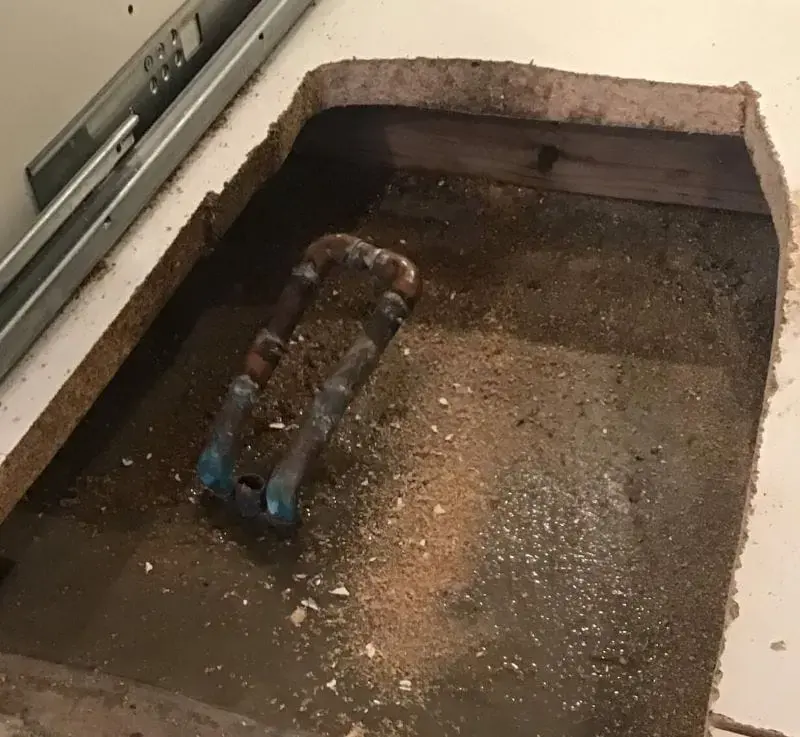
Hardwood is one of the slowest materials to dry because water soaks into dense wood and the slab or subfloor beneath it. In Carrollton, wood floors often sit on a slab with a moisture barrier, and water that gets under them from a supply line, a dishwasher or a slab leak has nowhere to go but up into the boards.
What water does to a wood floor
- Cupping: board edges rise as the bottom absorbs more water than the top
- Crowning: the center rises if the top dries first or the floor is sanded too early
- Buckling: boards lift off the subfloor or slab when swelling runs out of room
- Stains: dark marks where water sat around metal fasteners or finishes
How the drying team saves wood floors
Wood flooring is treated as a Class 4 material, which calls for specialty equipment and time.
- Pinless and pin meters map the wet boards against a dry reference board in another room.
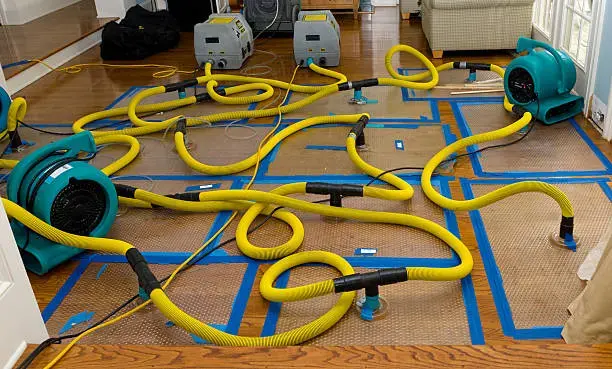
- Floor drying mats sealed to the surface pull moisture up through the wood under negative pressure.
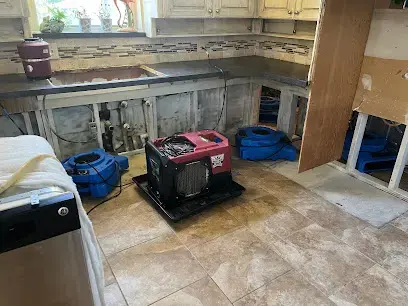
- LGR or desiccant dehumidifiers keep the air dry enough for the wood to release water.
- Readings are logged daily until the boards come back close to the dry reference.
When boards have to come up
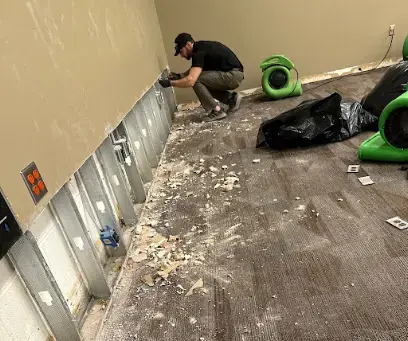
Floors soaked by Category 3 water, boards that have buckled off the fasteners and engineered flooring with delaminated layers usually come out. Many cupped solid hardwood floors flatten as they dry, and refinishing waits until readings are stable. Related: slab leak water damage and appliance supply line leaks.
Do not sand or refinish a cupped floor right away. Sanding before it dries can leave the floor crowned once the moisture leaves.
Wood and moisture
The USDA Forest Products Laboratory publishes research on how wood moves with moisture, and EPA WaterSense explains how to spot the hidden leaks that often start it.