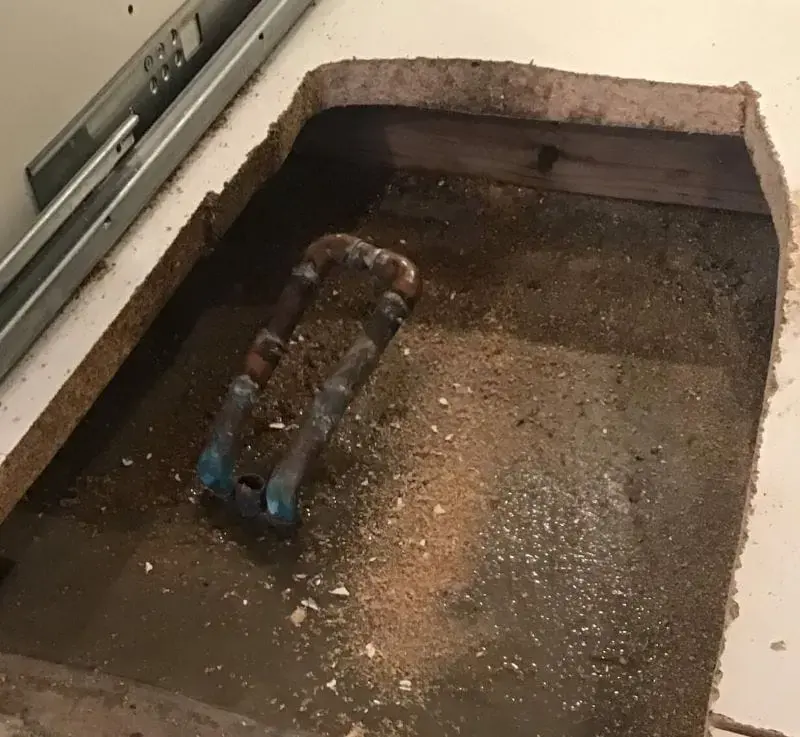
Carrollton sits on Blackland Prairie clay that swells when it is wet and shrinks in a drought. Slabs flex with it, and the copper and older supply lines cast into those slabs eventually crack or wear through. The water comes up through the slab, under the flooring, where nobody sees it until the damage is spread across a room or two.
Signs of a slab leak in a Carrollton home
- A warm or damp spot on tile or wood, often near the kitchen or a bathroom
- Baseboards swelling or carpet tack strip wet along one wall
- The sound of running water with every fixture off
- A water bill that climbs with no change in use
- Cracks in the slab or new gaps along interior walls after a dry summer
How slab leak water damage is handled
A plumber finds and repairs the break. The restoration team handles the water it left behind, and the two jobs are scheduled together so nothing gets dried twice.
- Moisture mapping with thermal imaging and pinless meters shows how far the water spread under flooring and into walls.
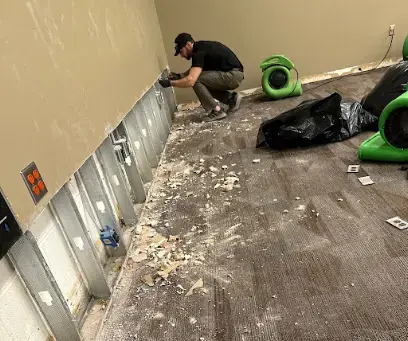
- Flooring over the wet area is lifted only where readings require it.
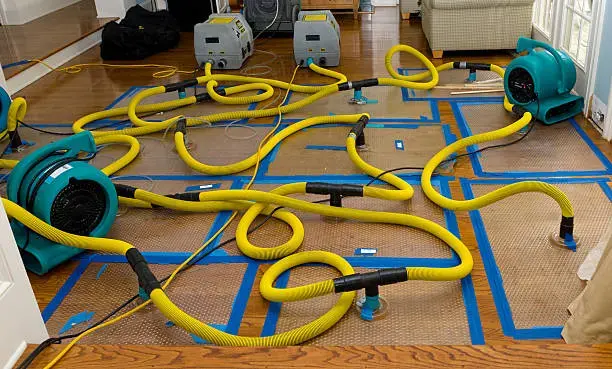
- Air movers and LGR dehumidifiers dry the slab surface, the bottom plates and the drywall, and specialty mats pull water from hardwood.
- Daily readings continue until the slab and walls match a dry reference.
Why the slab takes time
Concrete holds water and gives it up slowly, and a slab that has been wet for weeks releases moisture for days. Rushing new flooring onto a wet slab traps that moisture under it. The drying team verifies the slab with readings before any flooring goes back down.
Suspect a slab leak? Close the main shutoff to stop the flow, note the meter reading and call for a moisture map before anything gets torn up.
Expansive clay, explained
Texas A&M AgriLife Extension publishes homeowner material on North Texas clay soils and foundation watering, and EPA WaterSense explains how to check a water meter for a hidden leak.